


























What is a CubeSat?
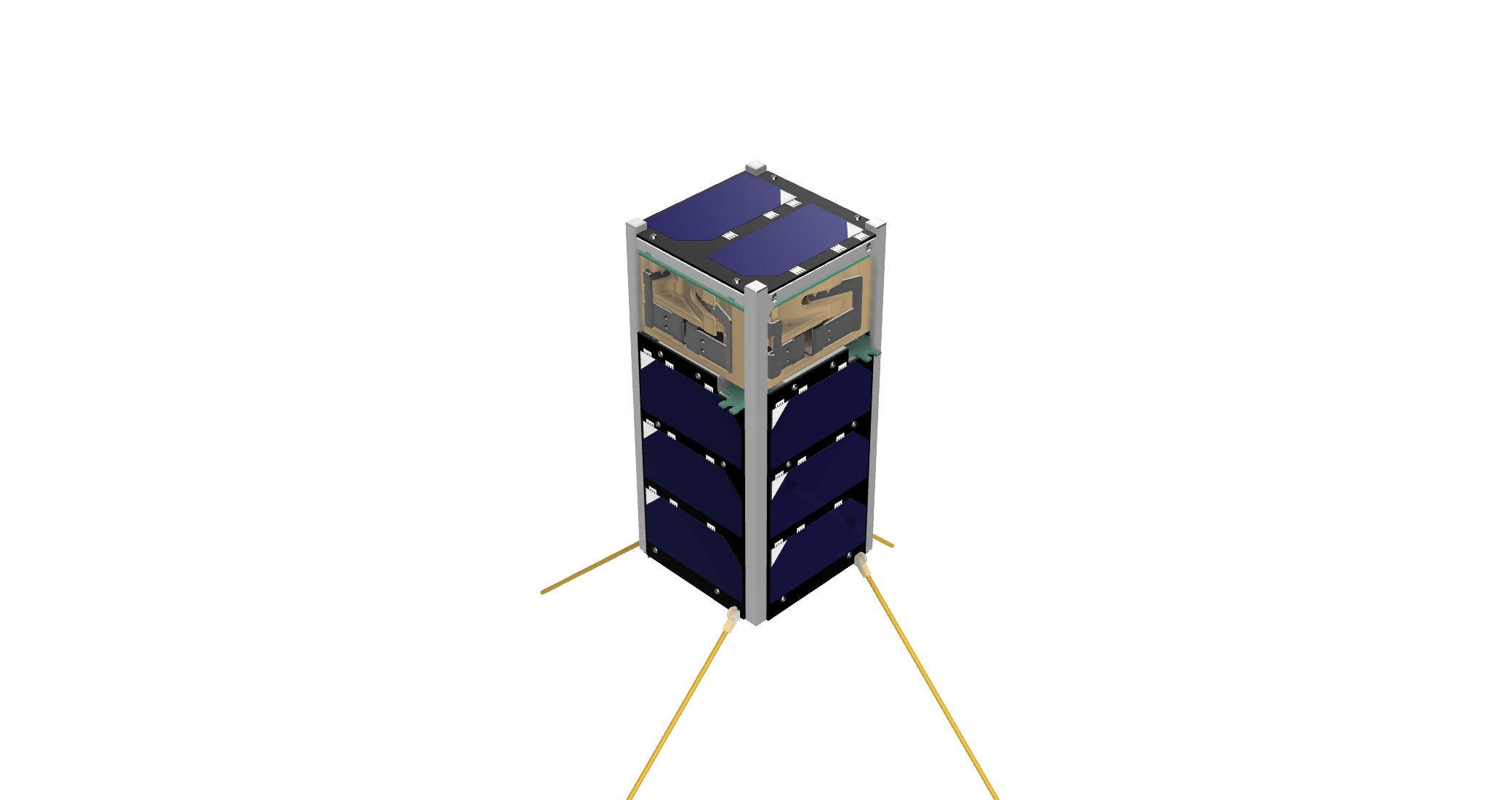
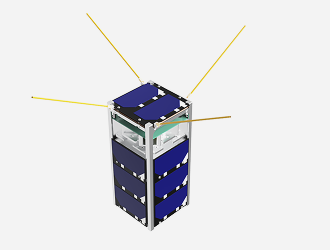
A CubeSat is a small satellite (nanosatellite) developed for a specific scientific or technological mission.
They follow the CubeSat standard of California Polytechnic State University (Cal Poly), which specifies a base measure of “one unit” or “1U” of 10 cm × 10 cm × 10 cm and 1.33 kilograms, in cube form.
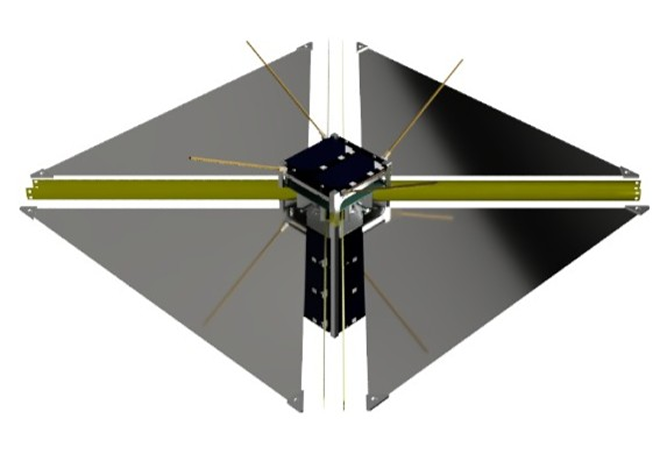
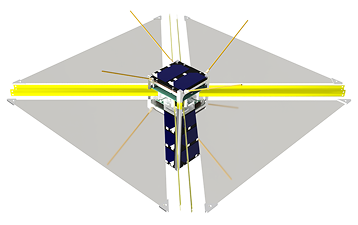
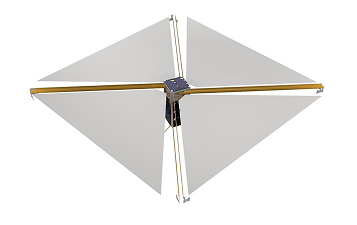
Multiple 1U units can be “stacked” to form larger CubeSats as mission requirements dictate. QUETZAL-1 was a 1U CubeSat measuring 10 cm × 10 cm × 10 cm, and QUETZAL-2 will be a 2U CubeSat measuring 10 cm × 10 cm × 20 cm.
Due to their compact size and low cost (compared to conventional satellites), they have been a key technology in democratizing access to space. Through CubeSats, space research has been opened to students, educators, researchers, and small businesses.
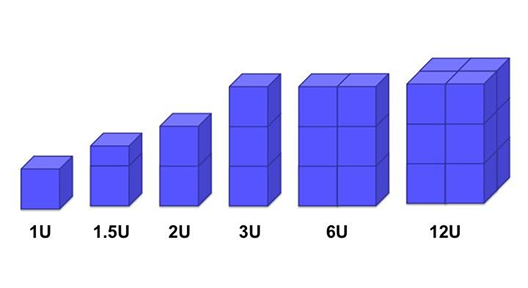
Credits: NASA
What is the mission of Quetzal-2?
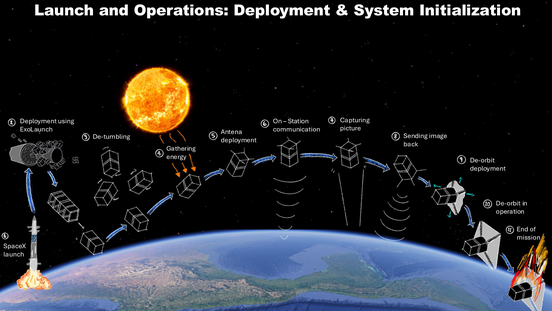
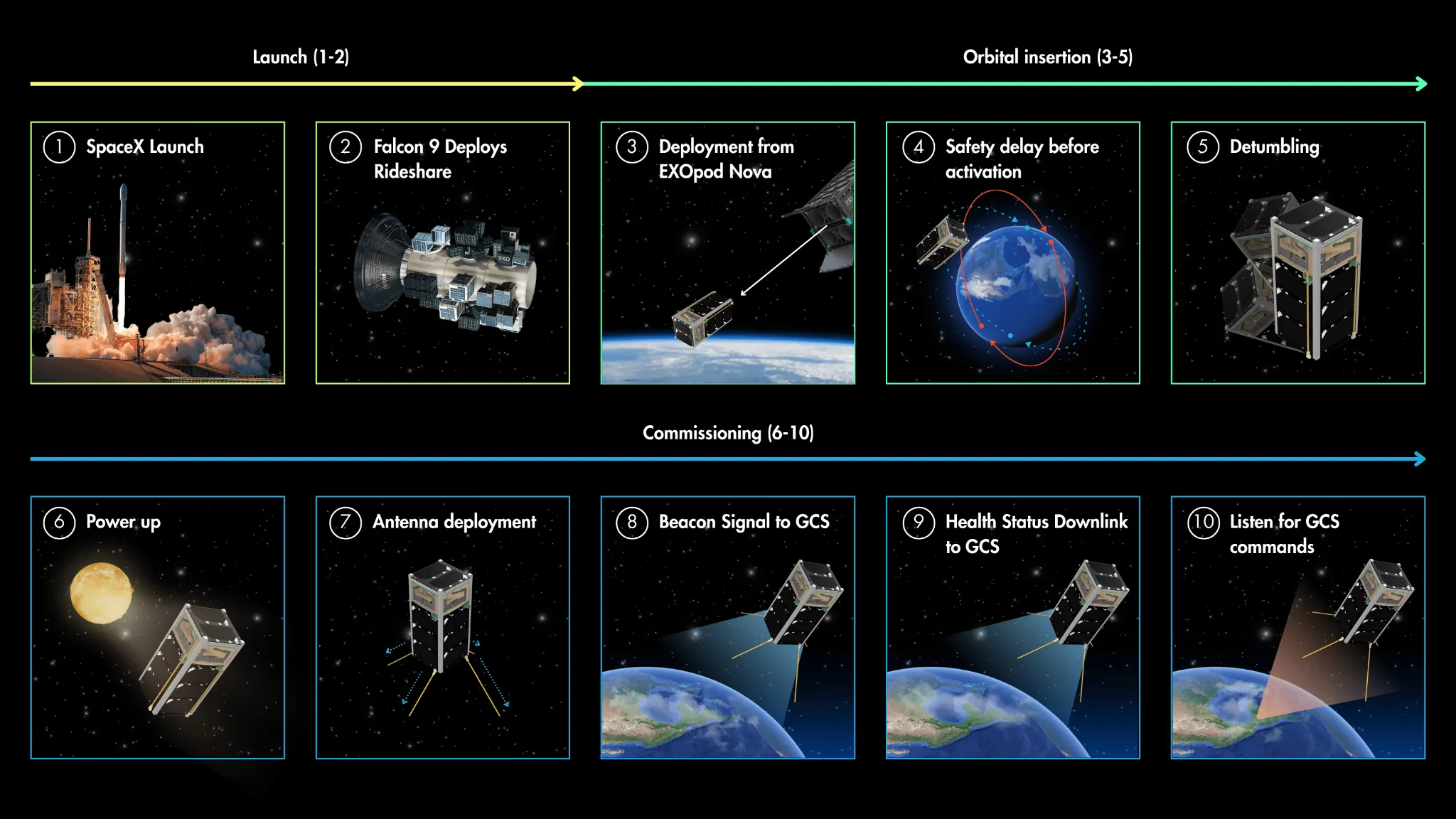
QUETZAL-2 will test an onboard computer designed locally, capable of running an artificial intelligence model to identify clouds in satellite imagery. It will also validate a responsible deorbit subsystem and enable the transmission of real-time satellite data to educational centers across the country, promoting open access to scientific information and strengthening education in science, technology, engineering, and mathematics (STEM).
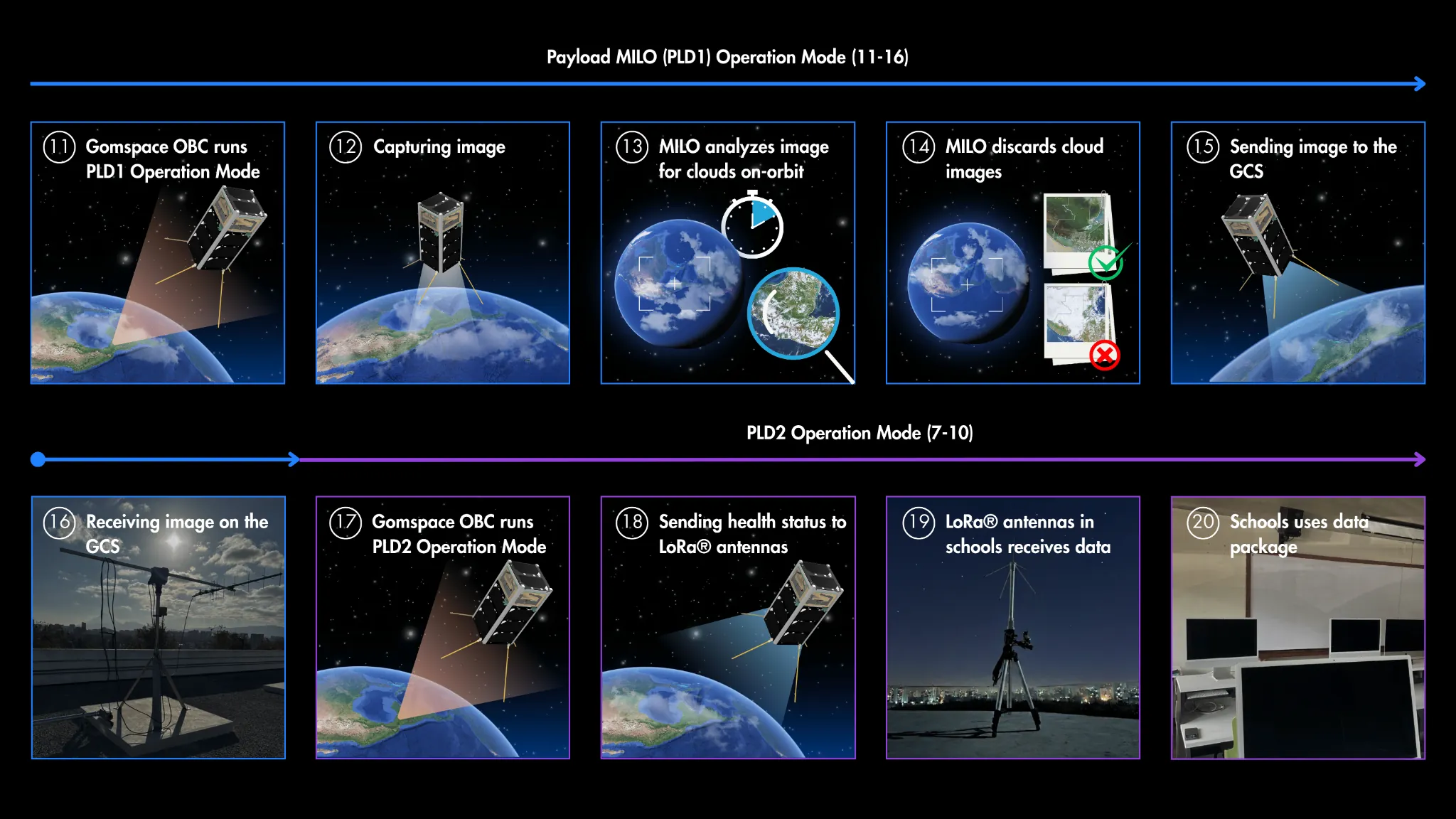
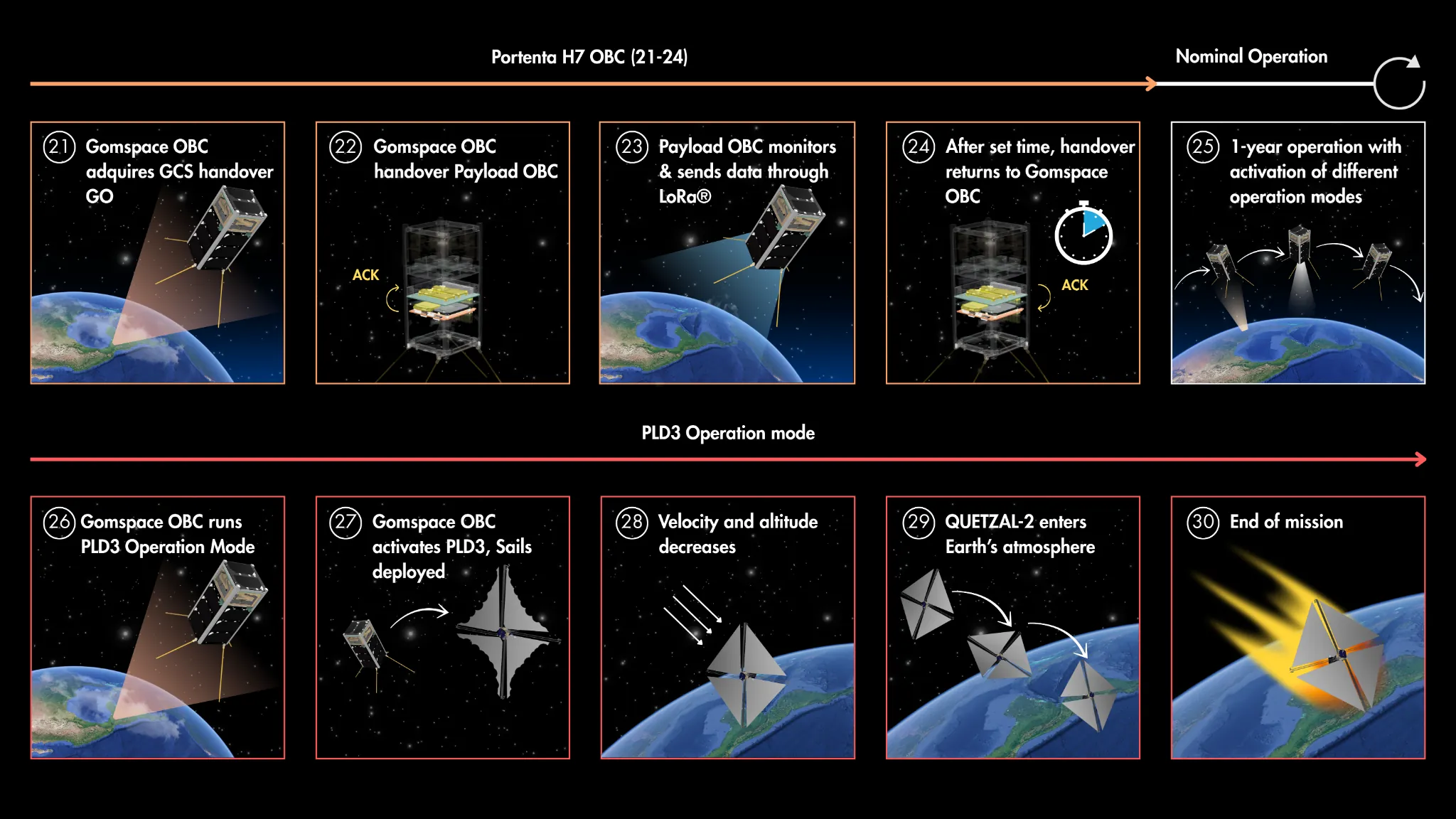
Who is involved in the project?
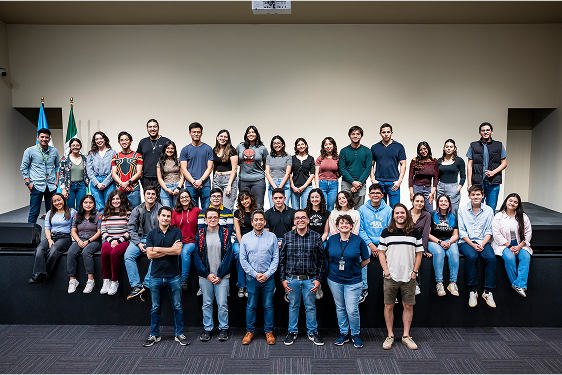
The QUETZAL-2 team is made up of students, faculty, and researchers from UVG, along with external advisors.
The Phase 3 team comprises more than 60 members, including students from Mechanical Engineering, Industrial Mechanics, Mechatronics, Computer Science and Information Technologies, Electronics, Industrial Engineering, Data Science and Business Administration, as well as students from Physics and International Marketing and Business Analytics.
By comparison, QUETZAL-1 had only 6 team members initially and 100 in total over all its phases.
Key information
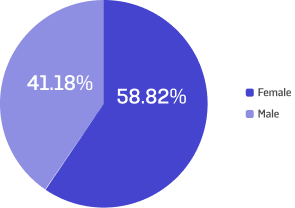
59% of the student team is composed of women.
Phase 3
Student Distribution by Gender
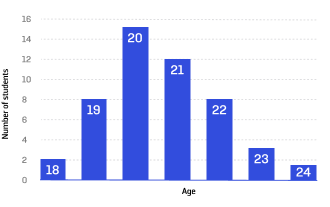
The average age of the students in Phase 3 of the project in 2026 is 21 years.
Phase 3
Student Distribution by Age
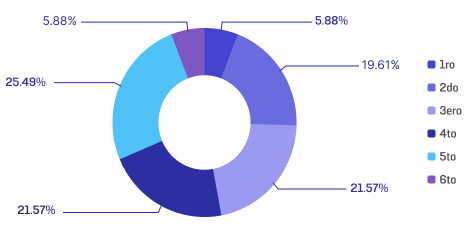
In Phase 3 in 2026, the team includes 13 first- and second-year students.
Phase 3
Student Distribution by Grade
Why is the CubeSat Quetzal-2 project important?

This project not only represents a technological advancement in Guatemala but also an opportunity to inspire future generations of Guatemalan scientists, engineers, and dreamers. The global satellite industry generates over $400 billion annually. We hope that in the near future, some of our students will undertake entrepreneurial ventures, create new companies in our country, and that Guatemala becomes one of the countries offering services in the value chain of this industry.
EXOpod Program

The EXOpod program of the United Nations Office for Outer Space Affairs (UNOOSA) and the German space company EXOlaunch selected 4 institutions worldwide, from among 17 proposals submitted by institutions from 15 countries, to give them the opportunity to send a CubeSat to space at no cost.
In the case of UVG, as one of the selected institutions, this program will enable the transport of QUETZAL-2 to space to place it into orbit.
Phase
Phase 1
- The QUETZAL-2 project kicked off in August 2024 with a team composed of 25 students and 4 faculty/researchers from UVG.
- This phase consisted of defining the mission, organizing the working team, and initial designs.
- During this phase, the application submitted in the first round of the UNOOSA and EXOlaunch EXOpod program was written, and in 2025 it was selected as one of the global winners.
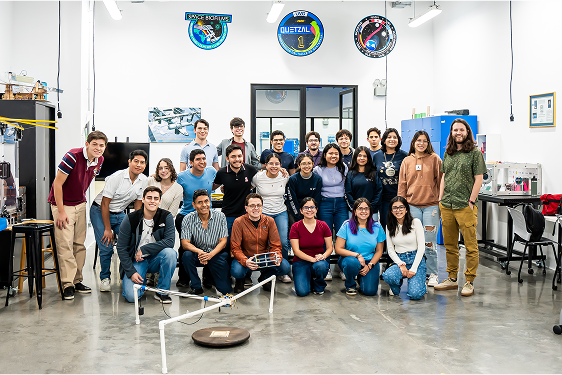
Click the image to view it in full size.
Phase 2
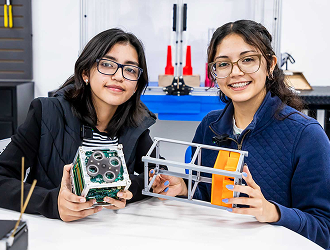
- Phase 2 began in March 2025, with a team of 39 students and 7 faculty/researchers from UVG.
- This phase consists of 13 student teams developing the different submodules that make up the QUETZAL-2 CubeSat.
- During this phase, work on the satellite design continued, and the first tests of its components were conducted.
Click the image to view it in full size.
Phase 3
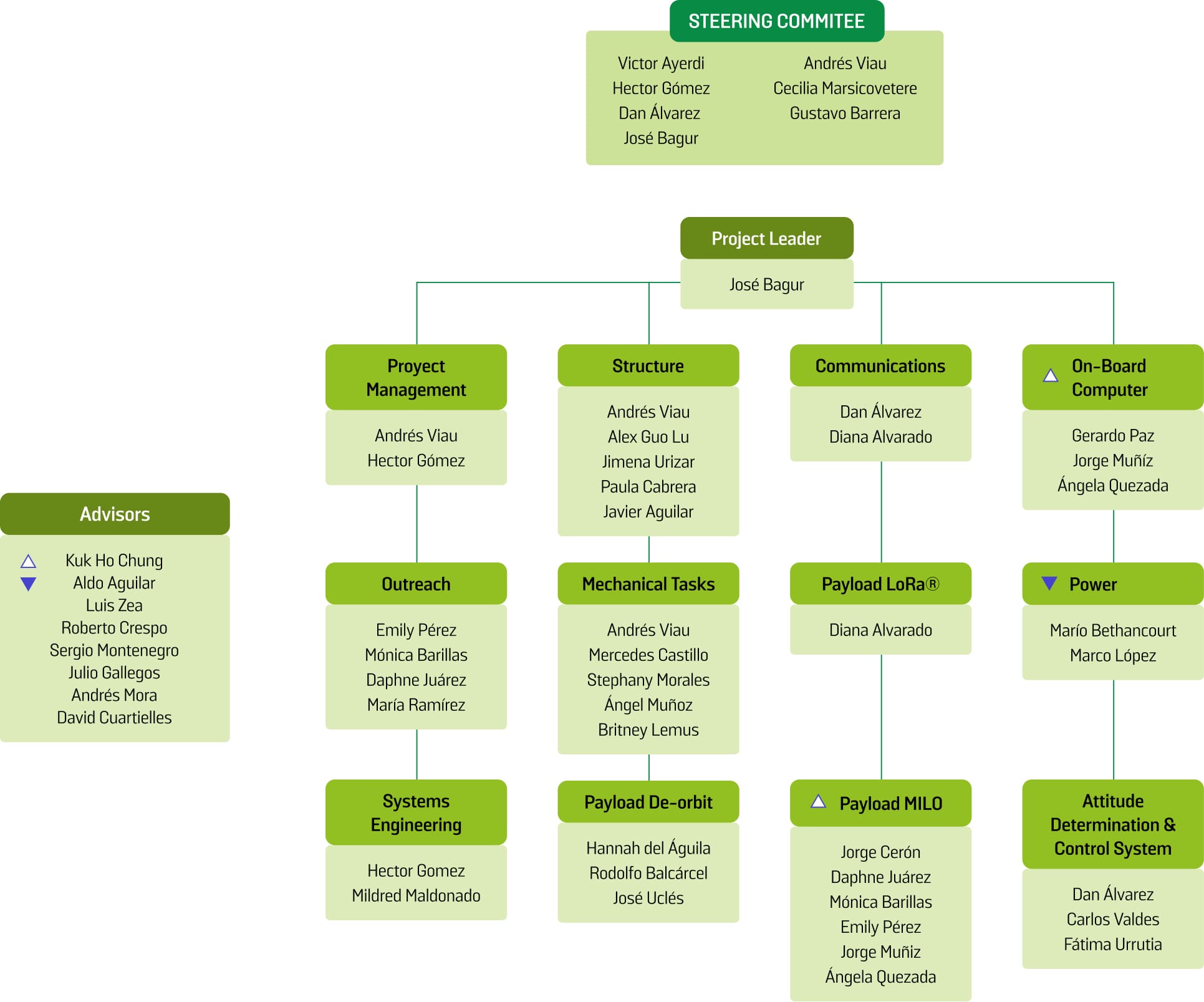
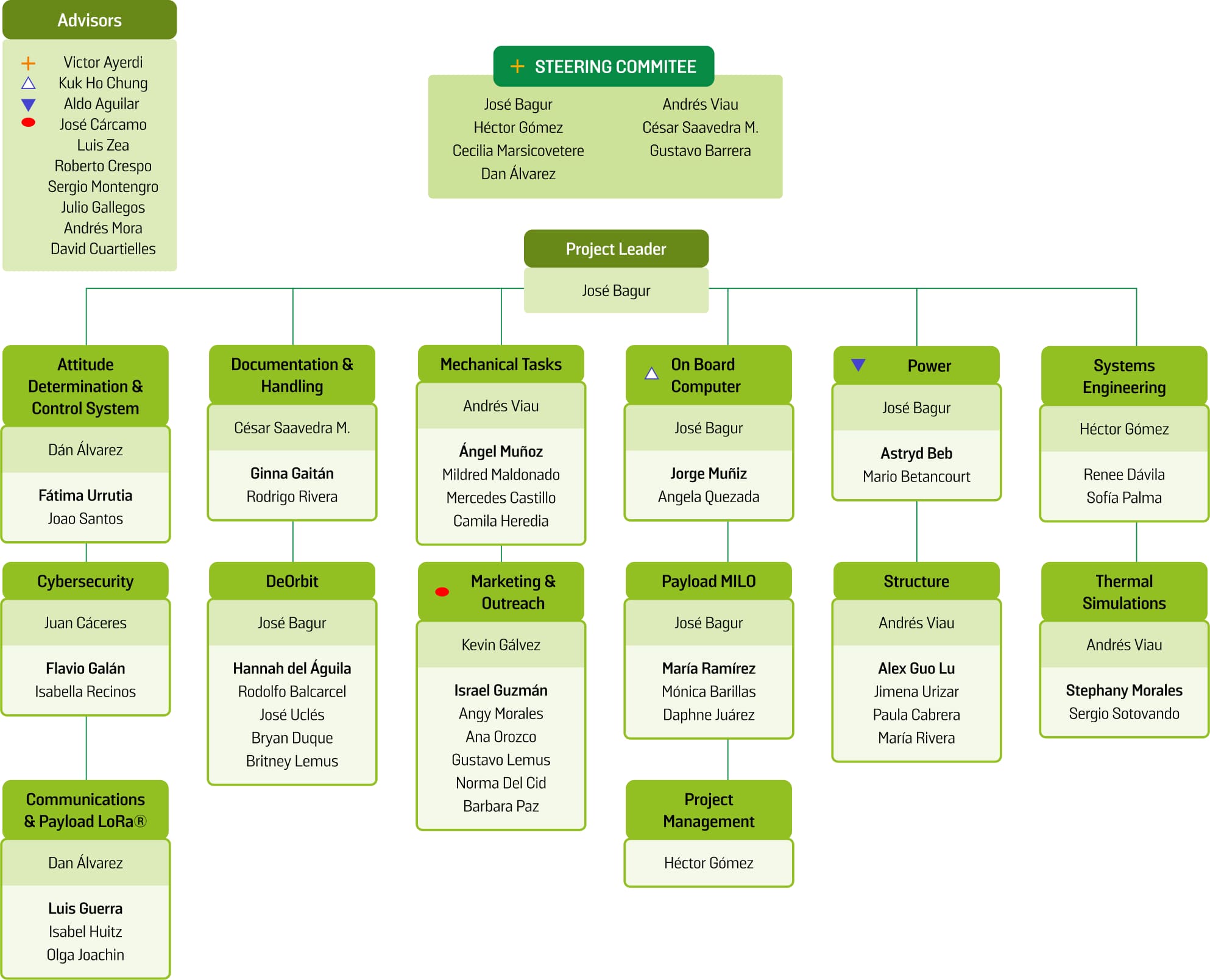
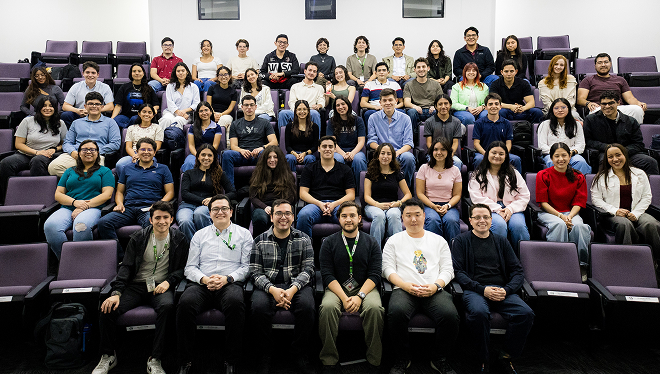
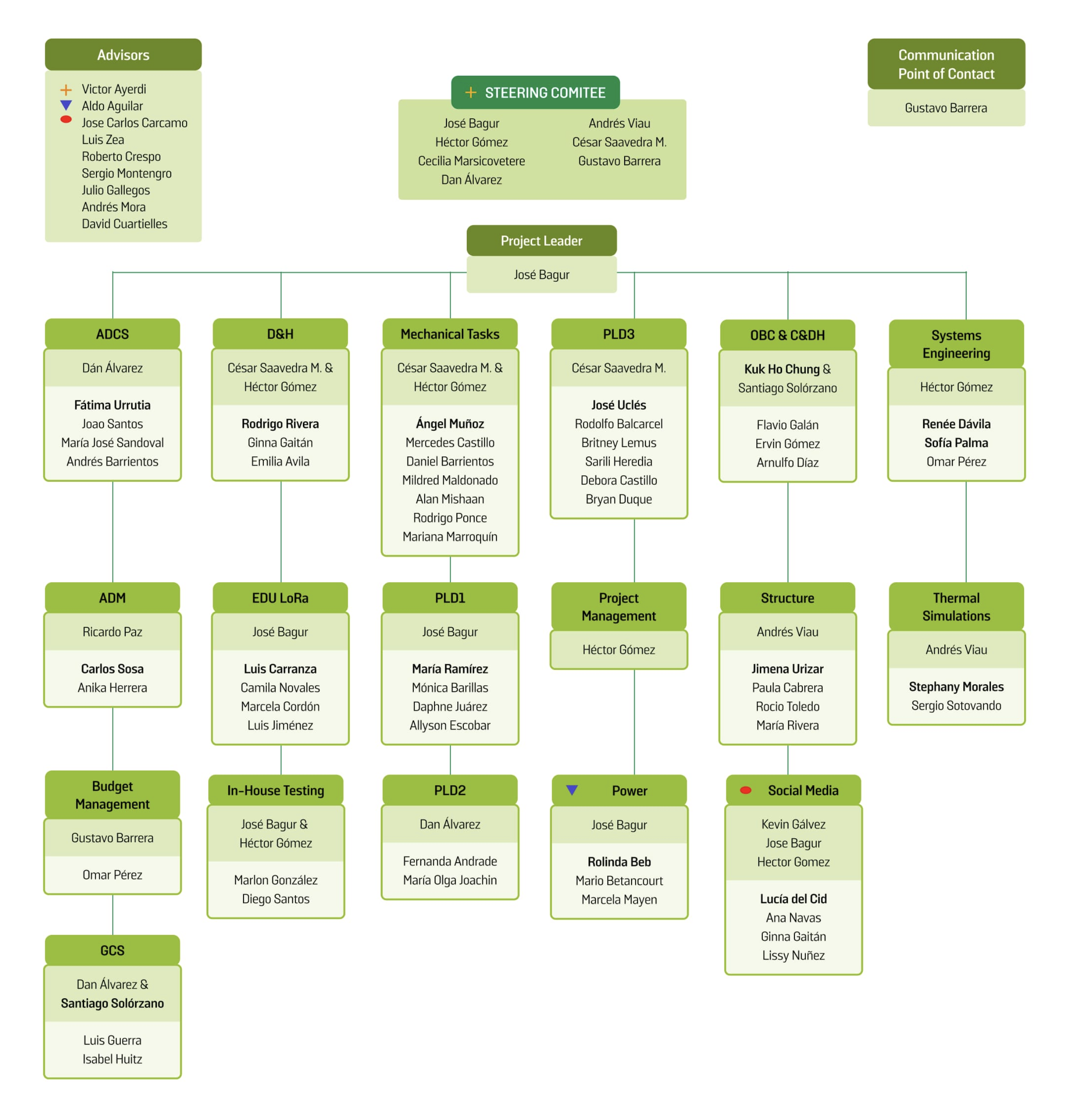
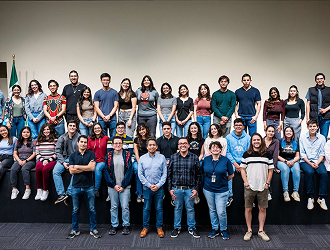
- Phase 3 began in March 2026, with a team of 51 students and 10 faculty/researchers from UVG.
- This phase consists of 12 student teams developing the different submodules that make up the QUETZAL-2 CubeSat.
- During this phase, the satellite design is concluded, and the manufacturing of some of its components is conducted on UVG laboratories.
Click the image to view it in full size.
Design
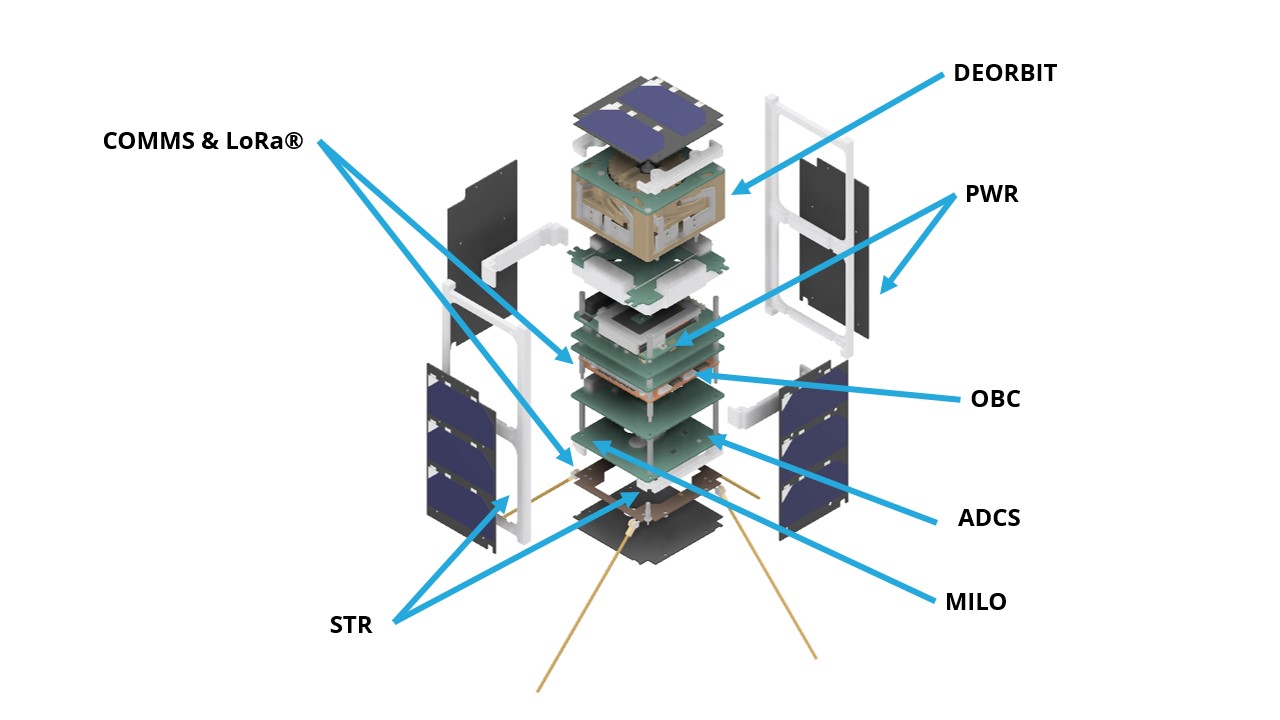
1. Systems Engineering
Submodule responsible for requirements definition and management, as well as risk assessment and mitigation during mission development. It is responsible for the integration of all QUETZAL-2 subsystems.
2. Machine Intelligence for Layer Observation Payload (MILO)
Submodule responsible for designing, manufacturing, and programming the onboard computer and AI model for automatic cloud detection.
3. Communications and LoRa® Payload (COMMS & LoRa®)
Submodule in charge of the QUETZAL-2 data transmission antennas and the design and assembly of ground stations.
4. Attitude Determination and Control System (ADCS)
Submodule responsible for monitoring and stabilizing QUETZAL-2’s orientation in orbit.
5. Orbital Decay System (DEORBIT)
Submodule responsible for re-entering QUETZAL-2 into the Earth’s atmosphere (and disintegrating in the process) at the end of its useful life. This aims to reduce space debris in orbit.
6. On-board Computer (OBC)
Submodule responsible for programming the main computer and managing the QUETZAL-2 data bus.
7. Power (PWR)
Submodule in charge of capturing, storing, and managing the power required for QUETZAL-2 to operate autonomously.
8. Structure (STR)
Submodule responsible for the design, manufacturing, and integration of the metallic structure along with the rest of QUETZAL-2 hardware.
9. Thermal Simulations
Submodule responsible for simulating, evaluating, and validating the robustness of QUETZAL-2 systems against the extreme temperature fluctuations present in low Earth orbi
10. Mechanical Tasks
Submodule responsible for risk studies, simulations, and manufacturing auxiliary components and systems.
11. Marketing and Outreach
Submodule responsible for disseminating the QUETZAL-2 project.
12. Documentation and Handling
Submodule responsible for managing documentation and content generated before, during, and after the development of QUETZAL-2.
13. EDU LoRa®
Submodule responsible for developing QUETZAL-2 educational materials, organizing workshops in educational centers, and conducting scientific outreach.
Publications
Quetzal-2: Cómo será el nuevo satélite guatemalteco construido por jóvenes y docentes universitarios de la UVG
Lee más aquí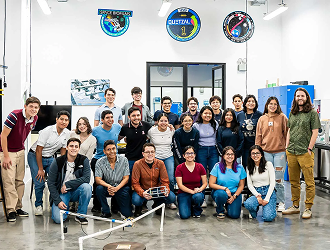
¡Buenas noticias! Fuimos seleccionados por UNOOSA y EXOlaunch para llevar el CubeSat Quetzal-2 al espacio
Lee más aquí
Scientific posters
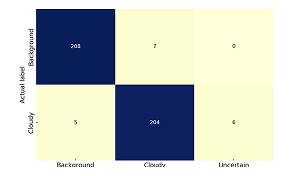
Payload-MILO (Machine Intelligence for Layer Observation): Visión Artificial Inteligente a Bordo de Quetzal-2
Autores: María Cifuentes, Sofía Barillas y Daphnne Juárez
 Lee más aquí
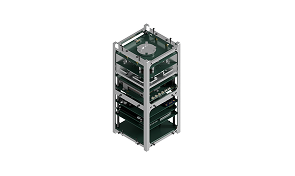
Diseño y fabricación de la estructura Quetzal-2
Autores: Paula Renata Cabrera Mendizábal, Alex Guo Lu, María Renée Rivera Herrera y Jimena José Urizar Rivas
 Lee más aquí
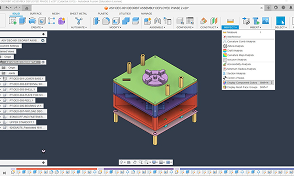
Implementación de herramientas digitales colaborativas en la ingeniería de sistemas de Quetzal-2
Autores: María Renée Dávila Turcios, Mildred Teresa Maldonado de León y Sofía Alejandra Palma de León
 Lee más aquí
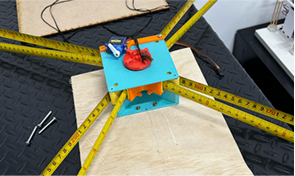
El rol de la documentación de Quetzal-2 para generar material académico en cursos de la Facultad de Ingeniería
Autores: Ginna Abigail Gaitán Paiz y José Rodrigo Rivera Chalí
 Lee más aquí
Integración y validación final del prototipo de un sistema pasivo de desorbitación para un CubeSat tipo U2
Autores: Hannah del Águila, José Uclés, Britney Lemus, Bryan Duque, José Balcárcel, Diego Hernández y Alberto López
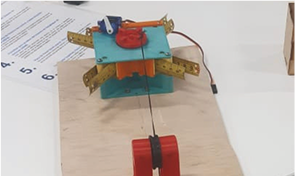 Lee más aquí
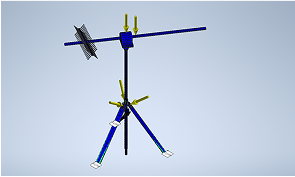
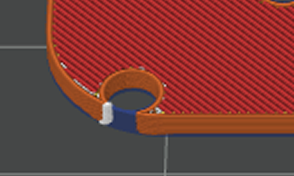
Optimización del diseño mecánico del Quetzal-2 mediante prototipado 3D
Autores: Mercedes Castillo, Sarili Heredia, Stephany Morales y Ángel Muñoz
 Lee más aquí
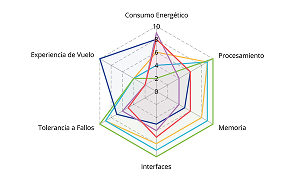
Computadora de abordo: 5 años después de Quetzal-1
Autores: Angela Marina Quezada Orozco y Jorge Enrique Muñiz Fuentes
 Lee más aquí
Presentations
Diseño de un protocolo estandarizado para pruebas térmicas en circuitos electrónicos de nanosatélites tipo CubeSat
Autores: Mercy Torres, Jimena Urizar, Mildred Maldonado, Mercedes Castillo, Julio Fuentes, José Bagur
Propuesta de una interfaz eléctrica estandarizada, eficiente y asequible para CubeSats
Autores:José Luis Álvarez Pineda, Jonathan Emanuel Pu Aguilera y José Antonio Bagur Nájera
Resultados experimentales del desarrollo y validación de un sistema de decaimiento orbital parsivo para CubeSats-3U
Autores:Andrea Barrientos, María Fernanda González, Gabriel Sánchez, Pablo Ruiz, Valerie Valdez y José A. Bagur
Obtención de ganancias para maniobra de detumbling de CubeSats basado en LQR
Autores: Julio Ávila, Ashley Morales y Pablo Moreno
Participants
Steering committee
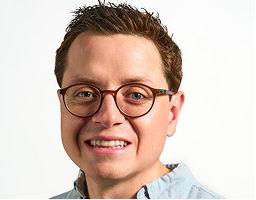
M. Sc. José Bagur
Mechatronics Engineer, Professor, and Researcher with dual master’s degrees in the Internet of Things (IoT) and Higher Education, Innovation, and Educational Technology.He has over ten years of experience developing advanced electronic systems for nanosatellites and IoT devices, leading technical teams, and creating technical content for open hardware and software platforms. He coordinates the Aerospace Laboratory at UVG, contributing to high‑impact space and educational projects in Guatemala. Co‑chair of the II Central American Space Congress and co‑author of the book Hope from the Sky: The Story of Guatemala’s First Satellite.

M. Sc. Héctor Gómez
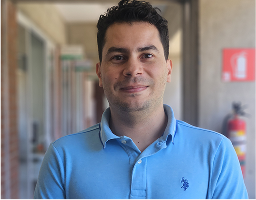
Ing. Andrés Viau
Mechanical Engineer (UVG) and Professor in the Department of Mechanical Engineering at UVG since 2012. He has guided students in reviewing project designs, especially in CAD and CAM. He also took part in a team that manufactured structural components for a biological experiment aboard the Artemis I mission that orbited the Moon in 2022.
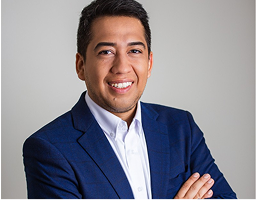
 gabarrera@uvg.edu.gt
M. Sc. Gustavo Barrera
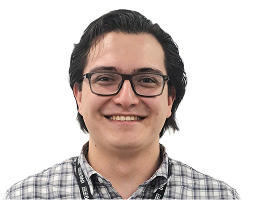
Ing. César Saavedra M.
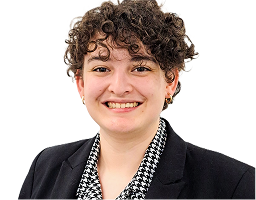
Ing. Cecilia Marsicovetere
Previously worked as an R&D engineer for a tech startup, with experience as a data scientist and freelance back‑end developer. Passionate about STEM outreach, she leads UVG’s “Women in Engineering” program to empower young women in engineering. Author of the foreword to Hope from the Sky: The Story of Guatemala’s First Satellite.

Ing. Dan Álvarez
Participants
phase 1
phase 2
phase 3
Contact
For more information, please reach out to:satelite@uvg.edu.gt
Universidad del Valle de Guatemala (UVG)